The Importance of Storytelling in Early Childhood Brain Development
Introduction
Storytelling is a wonderful way to inspire young children and make learning enjoyable. Through engaging tales, colorful picture books, and interactive reading sessions, preschoolers develop language skills, creativity, and a love for discovering new ideas. It also creates meaningful moments where children can listen, imagine, and express themselves with confidence.
Stories introduce children to new words, emotions, and experiences in a simple and memorable way. As they follow characters and adventures, they improve their listening, comprehension, and communication skills while learning important values such as kindness, honesty, sharing, and empathy. Storytelling also encourages curiosity and helps children connect lessons to real-life situations.
In addition to supporting academic growth, storytelling strengthens imagination and emotional development. It motivates children to think creatively, ask questions, and build confidence in expressing their thoughts. Whether at home or in the classroom, regular storytelling sessions create a strong foundation for literacy and nurture lifelong learners who enjoy reading and exploring the world around them.
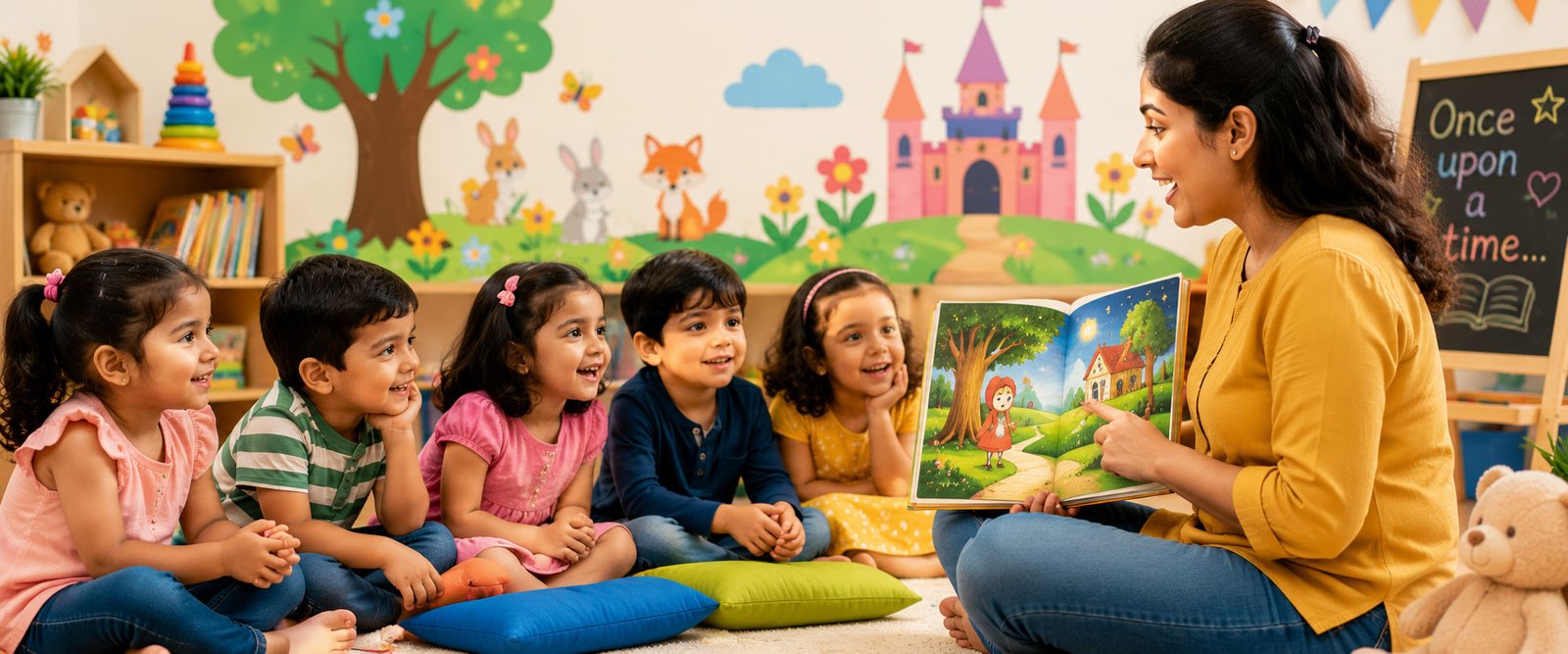
Enhances Language and Communication Skills
When children listen to stories, they are introduced to new words, phrases, and sentence structures. Regular storytelling sessions improve vocabulary, listening skills, and pronunciation while encouraging children to express their own thoughts and ideas with confidence.
Sparks Imagination and Creativity
Stories transport children into exciting worlds filled with adventure, friendship, and discovery. They inspire imagination and encourage preschoolers to think creatively, create their own stories, and engage in imaginative play that supports cognitive development.
Builds Emotional Intelligence
Through story characters and their experiences, children learn about emotions such as happiness, kindness, courage, empathy, and patience. They begin to understand different perspectives and develop the ability to recognize and manage their own feelings.
Improves Focus and Memory
Listening carefully to a story helps children strengthen their attention span and memory. Remembering characters, events, and sequences encourages concentration and builds important cognitive skills that support future classroom learning.
Encourages a Love for Reading
Children who enjoy storytelling often develop an early interest in books and reading. Positive experiences with stories create excitement about learning and lay the foundation for strong literacy skills as they progress through school.
Strengthens Parent-Child and Teacher-Child Bonds
Reading stories together creates meaningful moments of connection. Whether at home or in the classroom, storytelling encourages conversation, builds trust, and provides opportunities for children to ask questions and share their ideas.
Makes Learning Fun and Interactive
Teachers can bring stories to life using puppets, songs, role-playing, and picture books. These interactive experiences keep children engaged while helping them understand concepts in a playful and memorable way.
Conclusion
Storytelling is a powerful tool that nurtures every aspect of a preschool child’s development. It strengthens language skills, boosts creativity, teaches valuable life lessons, and fosters a lifelong love of reading and learning. By making storytelling a regular part of early childhood education, parents and educators can help children build confidence, curiosity, and the skills they need to succeed both in school and in life.